Collection: Diego Rivera
Diego María de la Concepción Juan Nepomuceno Estanislao de la Rivera y Barrientos Acosta y Rodríguez (December 8, 1886 – November 24, 1957) was a Mexican painter. His large frescoes helped establish the mural movement in Mexican and international art. Between 1922 and 1953, Rivera painted murals in, among other places, Mexico City, Chapingo, and Cuernavaca in Mexico, and San Francisco, Detroit, and New York City in the United States.
In 1931, a retrospective exhibition of his works was held at the Museum of Modern Art in Manhattan, shortly before Rivera's commencement of his 27-mural series known as Detroit Industry Murals the next year. Rivera had four wives and numerous children, including at least one illegitimate daughter. His first child and only son died at the age of two. His third wife was fellow Mexican artist Frida Kahlo, with whom he had a volatile relationship that continued until her death.
His previous two marriages, ending in divorce, were respectively to a fellow artist and a novelist, and his final marriage was to his agent. Due to his importance in the country's art history, the government of Mexico declared Rivera's works as monumentos históricos. Rivera held the record for highest price at auction for a work by a Latin American artist until November 2021, with his 1931 painting The Rivals.
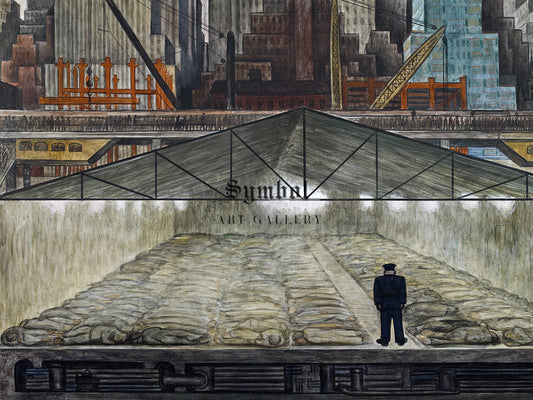
He studied under Octave Denis Victor Guillonnet. Among his canonical works are Río Juchitán, The History of Mexico, Sueño de una Tarde Dominical en la Alameda Central, and Detroit Industry Murals. He worked primarily in social-artistic project. His work is rooted in social realism and Mexican muralism. The work sits within the Art Deco & Interwar Modernism tradition.