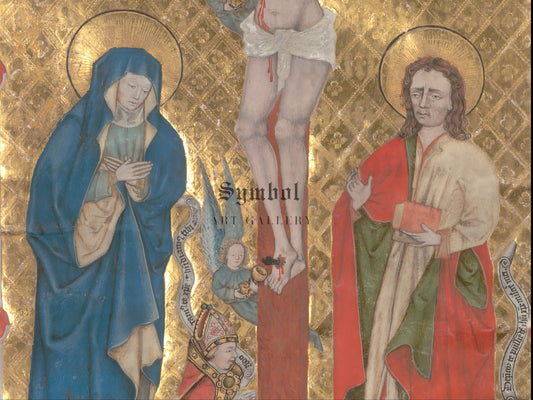
Medieval and Byzantine art covers European visual production between the fifth and the fifteenth centuries. The period extends from the dissolution of the Western Roman Empire to the early Italian Renaissance, and it is divided by historians into several successive phases. Early Christian and Late Antique art, from approximately 200 to 500 CE, adapted Roman models to Christian subject matter. Byzantine art emerged around 500 in the Eastern Roman Empire and continued, with internal phases of iconoclasm and revival, until the fall of Constantinople in 1453.
The Western Latin tradition passed through several distinct stages. Insular art flourished in the British Isles between the seventh and the tenth centuries, producing the great illuminated gospel books of Lindisfarne, Durrow, and Kells. Carolingian art took shape under Charlemagne and his successors in the late eighth and ninth centuries. The Romanesque period, from approximately 1000 to 1150, produced the first pan-European medieval style, with massive stone churches and integrated sculptural programmes. Gothic art emerged at the Abbey of Saint-Denis around 1140 and spread across Europe in successive cathedral programmes.
The principal media of the period were mosaic, fresco, illuminated manuscript, panel painting, sculpture in stone and wood, ivory carving, metalwork, stained glass, and tapestry. Religious subject matter dominated, though secular work existed in greater quantities than surviving examples suggest. The high cost of pigments such as ultramarine, gold leaf, and lapis lazuli typically exceeded the cost of the artist's labour, and reflects the value placed on the materials themselves.
International Gothic, the courtly idiom of the late fourteenth and early fifteenth centuries, marks the transition to Renaissance painting in both Italy and the Low Countries. The principal sub-movements of the period include Byzantine art, Romanesque art, Gothic art, Carolingian art, and Insular art.