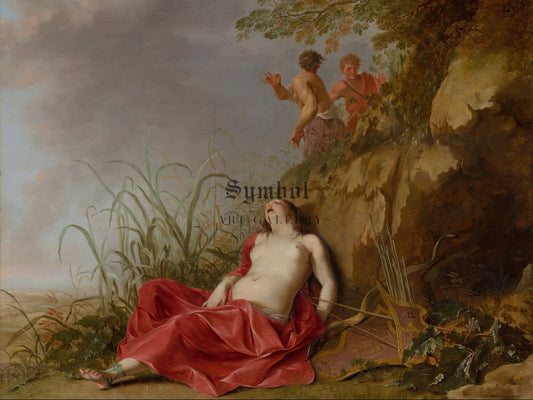
Collection: Dutch Golden Age
The Dutch Golden Age covers painting, drawing, and printmaking produced in the seventeenth century United Provinces, from approximately 1588 to 1672. The combination of Calvinist religion, Republican government, mercantile wealth, and a broad middle class market produced a body of work that turned away from altarpiece and court commission toward portrait, landscape, marine, still life, and genre painting on a scale Europe had not previously seen. Painters worked speculatively for the open market and developed highly specialised genres.
Rembrandt van Rijn is the period's defining figure, working across portraiture, biblical narrative, and the etched plate with unmatched psychological depth. Johannes Vermeer reduced the same impulse to a small body of domestic interiors saturated in northern light. Frans Hals developed a lively portrait idiom in Haarlem. Aelbert Cuyp specialised in golden-light river landscapes; Jacob van Ruisdael in classical landscape; Pieter de Hooch and Gerard ter Borch in domestic interiors; Jan Steen in moral genre scenes; Hendrick Avercamp in winter scenes; Pieter Saenredam in church interiors; Judith Leyster in small genre figures.