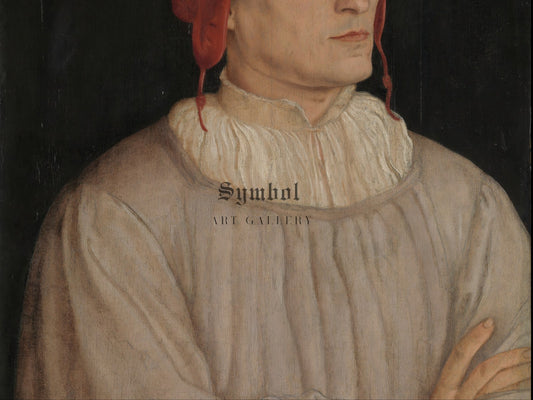
Barthel Beham (1502–1540) was a German engraver, miniaturist, and painter active in Nuremberg and later Munich. The younger brother of Hans Sebald Beham, he trained in Albrecht Dürer’s studio. Alongside his brother and Georg Pencz, Beham produced engravings on small copper plates during the Northern Renaissance, a group later labeled the "Kleinmeister" (Little Masters).
Beham’s work includes portraiture, religious and mythological scenes, and genre subjects, executed with fine linework and detail. His engravings, such as "Battle of Eighteen Nude Men" (c. 1520), show anatomical study and dynamic composition. While influenced by Dürer’s late classical style, Beham later adopted elements of Italian High Renaissance art, seen in portraits like "Ferdinand I" (1531). His miniatures and small-scale works combine Northern precision with Southern idealism.
Exiled from Nuremberg in 1525 for religious dissent, Beham moved to Munich, where he became court painter to Duke Wilhelm IV of Bavaria. His portraits of Bavarian nobility established his role as a portraitist of the period. Though he died young, his engravings influenced later printmakers by blending Northern and Italian Renaissance styles.