Collection: Vienna Secession
The Vienna Secession was founded on 3 April 1897 by a group of nineteen Austrian painters, architects, and designers who broke from the Künstlerhaus association in protest against its conservative exhibition policy. Gustav Klimt served as the first president, with Joseph Maria Olbrich, Josef Hoffmann, Koloman Moser, and Otto Wagner among the founding architects and designers. The Secession Building, designed by Olbrich and opened in 1898, capped by a gilded laurel dome, became the movement's headquarters and exhibition space.
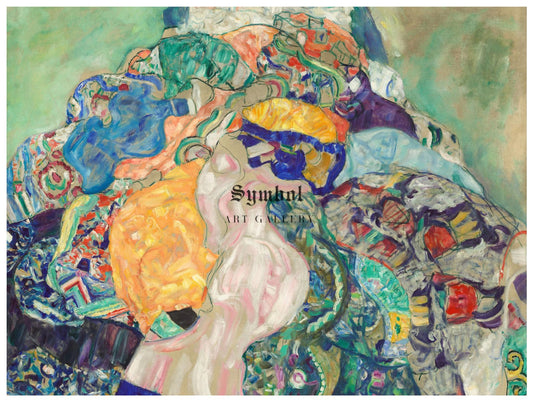
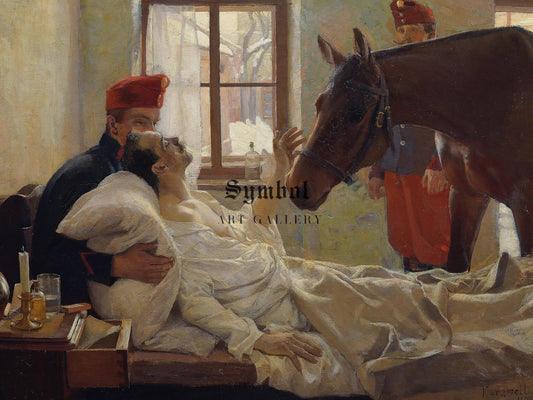
The group's published organ, Ver Sacrum, ran from 1898 to 1903 and made the Vienna idiom legible across central Europe. Klimt's gold-period paintings, including the Beethoven Frieze of 1902, define the visual signature of the movement at its peak. The painters Carl Moll, Max Kurzweil, Wilhelm Bernatzik, Ernst Stöhr, Alfred Roller, Maximilian Liebenwein, and Josef Maria Auchentaller belonged to the founding circle.
The Secession opened directly onto the Wiener Werkstätte, founded by Hoffmann and Moser in 1903, and prepared the ground for early Viennese Expressionism in the work of Egon Schiele, Oskar Kokoschka, and Richard Gerstl.