George Caleb Bingham (1811–1879) was an American painter associated with the early American West. Born in Augusta County, Virginia, he spent his childhood in Franklin, Missouri, and became known as "the Missouri artist." Bingham developed a style of genre painting that chronicled America's westward expansion and depicted life along the Mississippi and Missouri rivers.
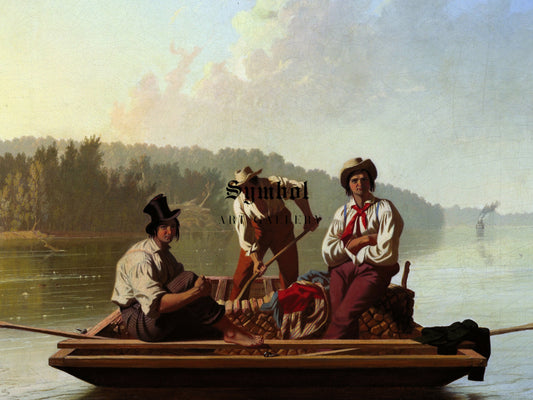
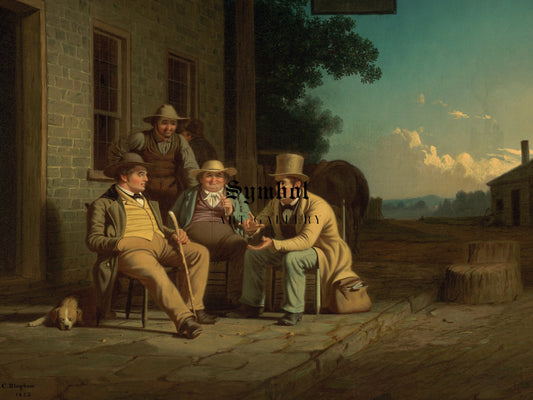
Bingham's works capture unique aspects of the American frontier, focusing on themes of community engagement, leisure, and river life before the steamboat era. His compositions, sometimes described as luminist, portray fur trappers, riverboat men, and frontier settlers. Fur Traders Descending the Missouri (1845) exemplifies his narrative approach, depicting figures engaged in daily activities within a distinct American landscape.
Beyond his genre scenes, Bingham was a prolific portrait artist, completing approximately 500 portraits of pioneering Missourians and political figures such as John Quincy Adams. His paintings are held in significant museum collections and are considered vivid historical records of the politics, commerce, and social relations of the American frontier. A comprehensive George Caleb Bingham Catalogue Raisonné was launched in 2018, building on earlier scholarship.