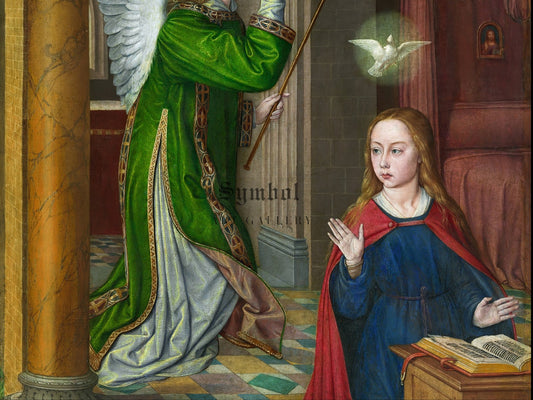
Jean Hey, known as the Master of Moulins, was an active painter in France during the late 15th and early 16th centuries. His identity remains uncertain, though he worked for the Bourbon dukes in Moulins.
Trained in the Northern Renaissance tradition, his work reflects the influence of Netherlandish painting, particularly in its meticulous detail and luminous glazing techniques. The altarpiece "The Annunciation" (1490–95) exemplifies his integration of French and Flemish stylistic elements.
Hey’s paintings include refined portraiture and devotional imagery with delicate modeling, rich coloration, and expressive figures. His works often feature elongated proportions and a subdued emotional tone, aligning with the International Gothic aesthetic while anticipating High Renaissance clarity. The "Moulins Triptych" (c. 1498–1500), attributed to him, shows his mastery of spatial composition and symbolic iconography, particularly in its depiction of the Bourbon family alongside sacred figures.
Though documentation of his career is limited, Hey’s influence appears in the spread of Netherlandish techniques among French court painters. His fusion of Northern and Southern European traditions contributed to early 16th-century French painting, bridging the late medieval and Renaissance periods. Fragments such as "Mourning Virgin" and "Saint John the Evangelist" (c. 1500) demonstrate his precise draftsmanship and atmospheric depth.