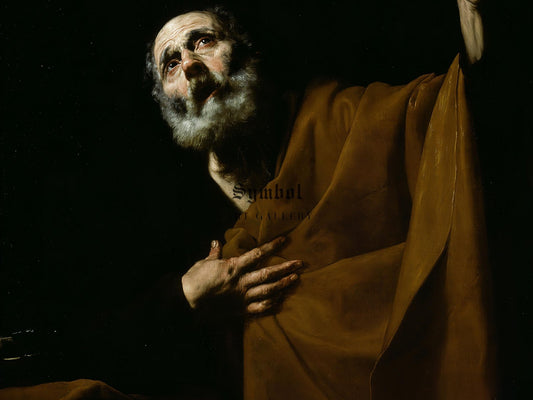
Collection: Jusepe de Ribera
Jusepe de Ribera (17 February 1591 – 3 November 1652) was a Spanish painter and printmaker. Ribera, Francisco de Zurbarán, Bartolomé Esteban Murillo, and the singular Diego Velázquez, are regarded as the major artists of Spanish Baroque painting. Referring to a series of Ribera exhibitions held in the late 20th century, Philippe de Montebello wrote "If Ribera's status as the undisputed protagonist of Neapolitan painting had ever been in doubt, it was no longer.
Indeed, to many it seemed that Ribera emerged from these exhibitions as not simply the greatest Neapolitan artist of his age but one of the outstanding European masters of the seventeenth century." Jusepe de Ribera has also been referred to as José de Ribera (usual in Spanish and French), Josep de Ribera (in Catalan), and was called Lo Spagnoletto (Italian for "the Little Spaniard") by his contemporaries and early historians. Ribera created history paintings, including traditional Biblical subjects and episodes from Greek mythology.
He is perhaps best known for his numerous views of martyrdom, which at times are brutal scenes depicting bound saints and satyrs as they are flayed or crucified in agony. Less familiar are his occasional, but accomplished portraits, still lifes and landscapes.
His formative teachers included Francesc Ribalta. Notable paintings include Saint Francis receives the Seven Privileges from the Angel, Prophets and Patriarchs, Communion of the Apostle, and Saint Bartholomew. His practice spanned mythological painting and religious art. He is associated with the Spanish Golden Age current.