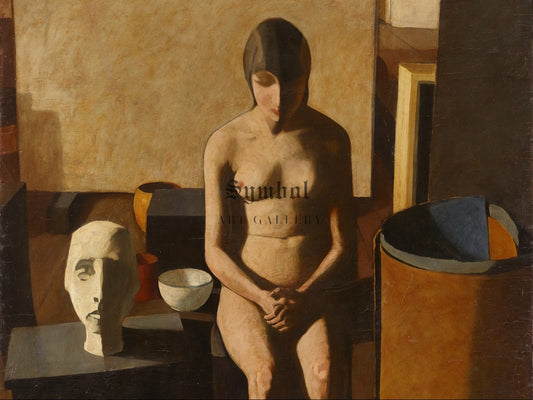
Metaphysical Painting, Pittura Metafisica, is the Italian movement Giorgio de Chirico (1888–1978) developed in Florence and Turin between 1909 and 1911, refined in Paris between 1911 and 1915, and codified during his convalescence with Carlo Carrà (1881–1966) at the military hospital in Ferrara in 1917. The visual programme placed tailor's mannequins, classical statuary, geometric instruments, and architectural fragments in airless arcaded squares lit by oblique low sun, building compositions of unsettling, dreamlike stillness.
De Chirico's canonical canvases include The Mystery and Melancholy of a Street (1914), The Song of Love (1914), and The Disquieting Muses (1917). The Ferrara collaboration with Carrà produced Carrà's The Drunken Gentleman (1916) and The Enchanted Room (1917). Giorgio Morandi (1890–1964) and de Chirico's brother Alberto Savinio joined the circle briefly in 1918 before Morandi developed his own austere still life programme. Filippo de Pisis circled the group from Ferrara. The Rome journal Valori Plastici, edited by Mario Broglio from 1918 to 1922, served as the movement's principal organ. By 1919 de Chirico and Carrà had moved toward classical revival, but the Metaphysical canvases became one of the principal direct sources for the founding of Surrealism in 1924.