Paul Nash (1889–1946) was a British painter, printmaker, photographer, and designer of applied art. Born in London and raised in Buckinghamshire, he studied at the Slade School of Art, where he focused on landscape painting despite limited proficiency in figure drawing.
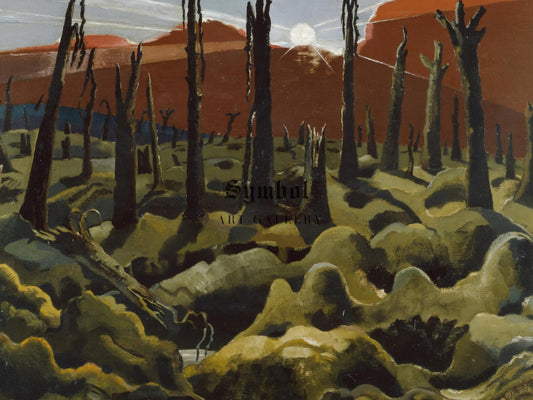
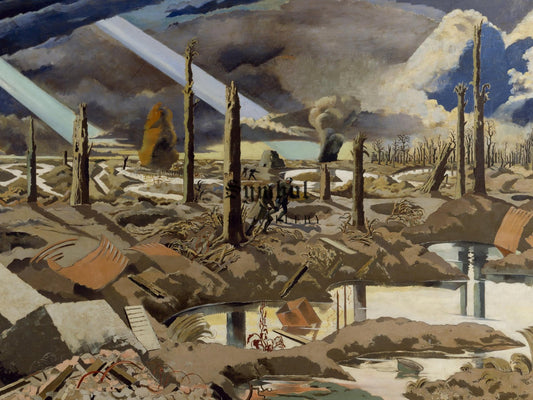
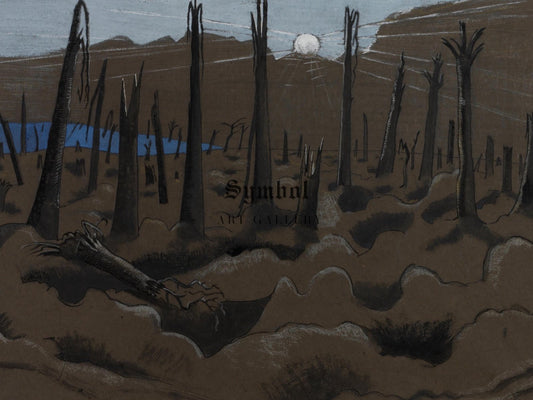
Nash contributed to Modernism in English art through his depictions of ancient landscapes, including Iron Age hill forts and megalithic sites like Avebury and Wittenham Clumps. His work as an official war artist during World War I produced some of the most enduring images of the conflict.
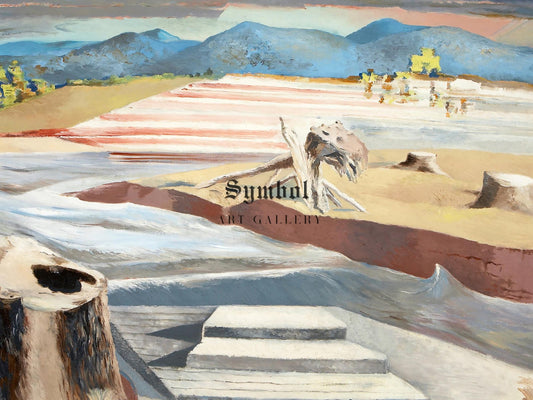
Nash’s landscapes often integrated everyday objects into compositions that assumed symbolic or surreal dimensions, particularly in the 1930s. His technique evolved from a formalized, decorative approach to increasingly abstract and mystical representations, influenced by Giorgio de Chirico and surrealist principles. During World War II, despite chronic asthma, he created anthropomorphic depictions of aircraft and later produced landscapes imbued with intense symbolic resonance. Nash also worked as an illustrator, stage designer, and poster artist, extending his practice across multiple media.
Nash’s contributions to British Modernism included his ability to reconcile traditional landscape subjects with avant-garde experimentation. His later works, such as "Equivalents for the Megaliths" (1935), combined ancient motifs and modernist abstraction. Though his career ended prematurely due to illness, his influence appeared in the work of later British surrealists and landscape painters.