Collection: Yves Tanguy
Yves Tanguy (1900–1955) was a French-born painter who became a naturalized American citizen. Largely self-taught, he joined the Surrealist movement in Paris during the 1920s after André Breton introduced him through Jacques Prévert. In 1923, Tanguy saw Giorgio de Chirico’s metaphysical paintings, which prompted him to abandon a bohemian lifestyle and commit to painting. By 1925, his work appeared in Surrealist exhibitions and in "La Révolution Surréaliste".
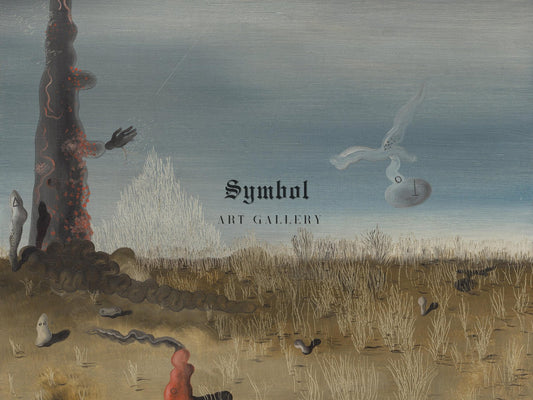
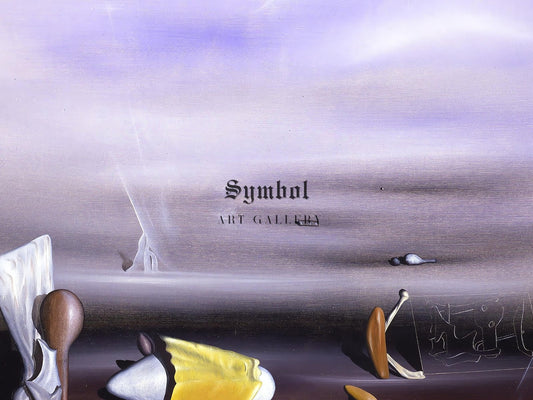
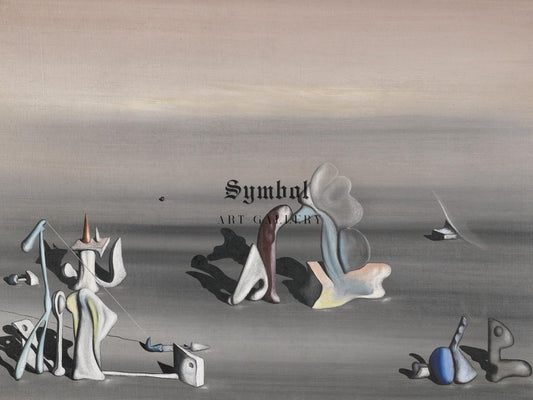
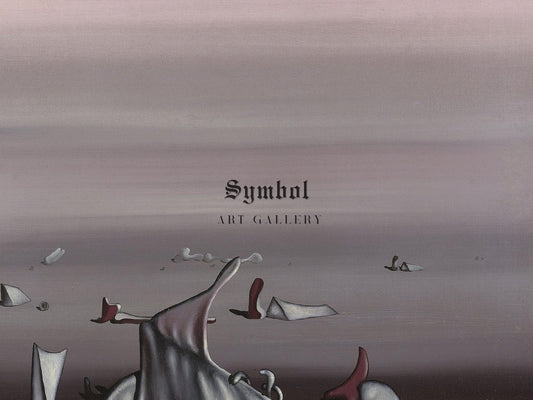
Tanguy painted abstract, biomorphic landscapes filled with amorphous, often skeletal forms. His canvases depict desolate, dreamlike expanses, neither terrestrial nor cosmic, using ochres, grays, and muted blues. He applied smooth glazes and precise draftsmanship, creating a paradoxical clarity despite the irrational subject matter. "The Certitude of the Never Seen" (1933) demonstrates this tension between precision and ambiguity.
After moving to the United States in 1939, Tanguy influenced American Surrealists and Abstract Expressionists. In 1940, he married Kay Sage, and they collaborated on exhibitions. His later works, such as "Piercing the Stars" (1951), show greater spatial complexity, pushing the Surrealist idiom further into abstraction. Though he avoided direct political statements, his use of automatism and the unconscious resonated with post-war artists exploring abstraction’s psychological dimensions.