The Japanese woodblock print, ukiyo-e, ran from the late seventeenth century to the close of the Edo period in 1868 and resumed in modified form through the twentieth century shin-hanga and sōsaku-hanga revivals. Its name, the floating world, refers to the urban culture of Edo, present day Tokyo, with its theatre districts, courtesans, sumo, and seasonal festivals. The prints were popular ephemera, made cheaply enough to circulate among townspeople, yet they record one of the most refined design traditions in world art.
Three names dominate the late Edo period. Katsushika Hokusai brought the form to its widest range, working through landscape, manga style sketchbooks, and the late Thirty Six Views of Mount Fuji that included the Great Wave off Kanagawa. Utagawa Hiroshige made landscape and weather his principal subject, the Fifty Three Stations of the Tōkaidō and the One Hundred Famous Views of Edo defining the lyrical wing of late ukiyo-e. Earlier in the tradition, Kitagawa Utamaro fixed the canonical bijin-ga image of feminine beauty.
European reception, called Japonisme, transformed nineteenth century French art. The flat colour, asymmetric framing, and stylised line of the woodblock entered the work of Manet, Whistler, Edgar Degas, Mary Cassatt, Vincent van Gogh, and the Nabis through prints brought back as wrapping paper, then collected in earnest after the 1867 Paris Exposition.
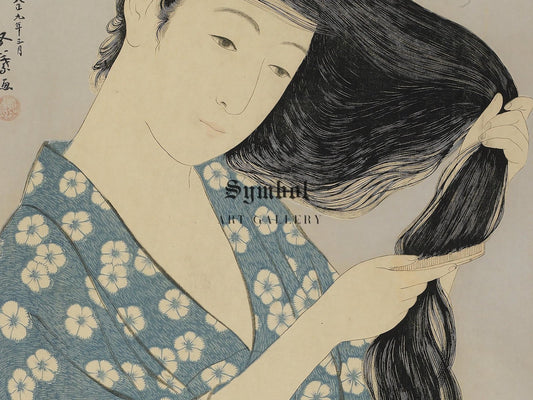
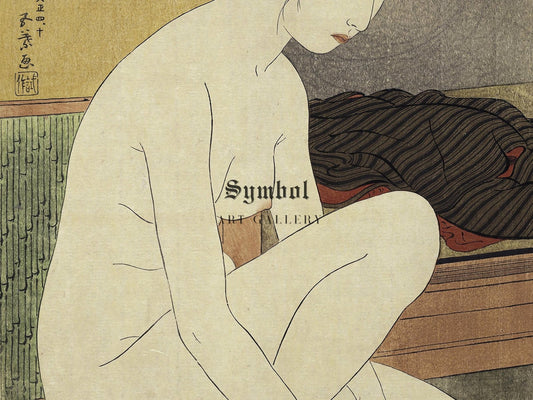
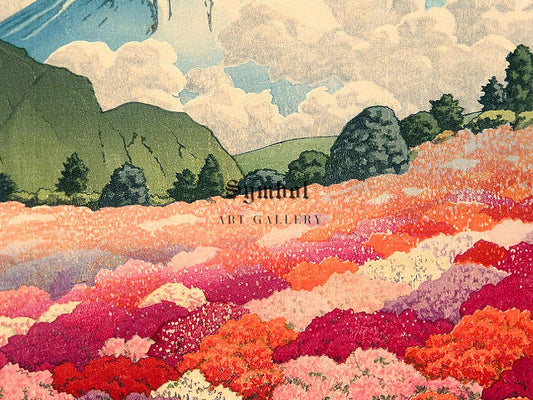
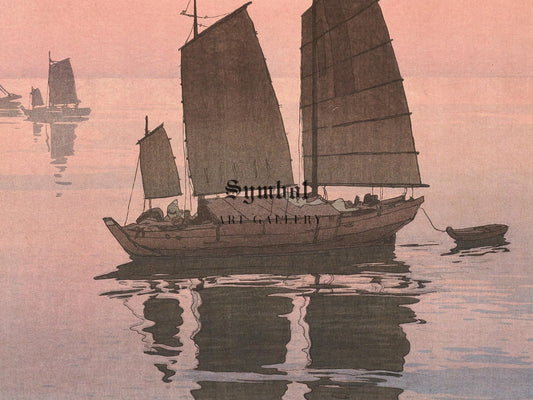
The prints gathered here cover Edo ukiyo-e and the modern shin-hanga revival of the early twentieth century. The collection sits beside the gallery's Orientalism & Exoticism holdings, with which it shares a chapter of European reception, and the Post-Impressionism selection, where the European debt to ukiyo-e is most visible.