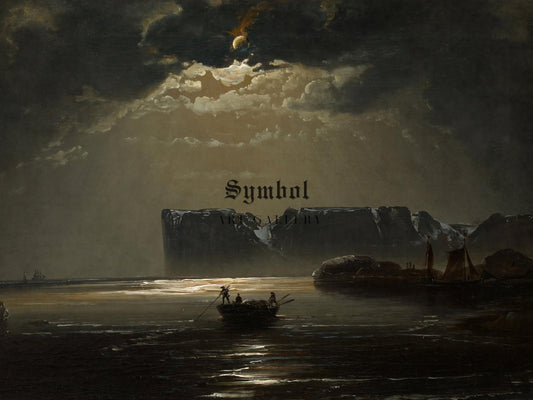
Collection: Peder Balke
Peder Balke (1804-1887) was born on the island of Helgøya in Hedmark County, Norway. He trained under Norwegian landscape painter Johan Christian Dahl in Dresden in the 1830s, adopting Dahl’s Romantic approach to natural scenery. Balke traveled extensively along Norway’s northern coast in 1832, sketching fjords, waterfalls, and Arctic light conditions that later became central motifs in his work.
Balke painted Norwegian landscapes in a restrained palette dominated by greys, blues, and whites, often using thin oil glazes over a monochrome underpainting. His compositions frequently isolate a single lighthouse, mountain peak, or storm-tossed ship against vast skies, emphasizing the sublime scale of nature. By the 1840s, he had developed a reductive technique that prefigured Tonalism, applying paint in broad, almost abstract strokes to evoke mist and twilight.
Balke’s work was largely forgotten after his death until a 1981 exhibition at the Henie Onstad Kunstsenter in Oslo. His stark, atmospheric landscapes influenced later Norwegian Romantic painters and resonated with 20th-century Tonalist and Symbolist movements.