Collection: Ancient & Classical Art

Ancient and Classical art covers the long span of Mediterranean visual culture from the third millennium BCE to the fall of the Western Roman Empire in the fifth century. It is an enormous field, taking in Egyptian wall painting and sculpture, Cycladic and Minoan work, the Greek transition from Geometric pottery to the high Classical sculpture of the fifth century BCE, the Hellenistic expansion that followed Alexander, Etruscan tomb art, and the Roman synthesis that absorbed and transmitted all of it.

The Greek invention that mattered most for European art was the rendering of the human body in repose, contrapposto and idealised proportion. The fifth century achievement of Phidias and Polykleitos established a vocabulary of form that Roman copyists then circulated through the empire. Hellenistic sculpture extended the language toward emotion, age, and movement, while Roman painting, preserved at Pompeii and Herculaneum, gives the only large surviving body of ancient mural decoration.

The visual culture of antiquity reached the modern world principally through engraving. Eighteenth century volumes by Piranesi, the catalogues of the Bourbon excavations, and the great Vasari and Winckelmann editions made Greek and Roman material available to European artists who could not travel. These prints became the working tools of Neoclassical painters, architects, and decorators across the Continent.

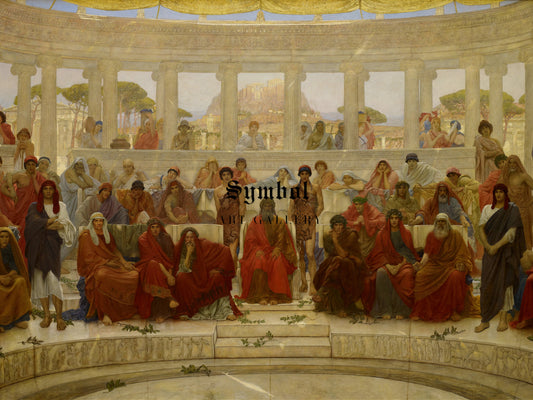
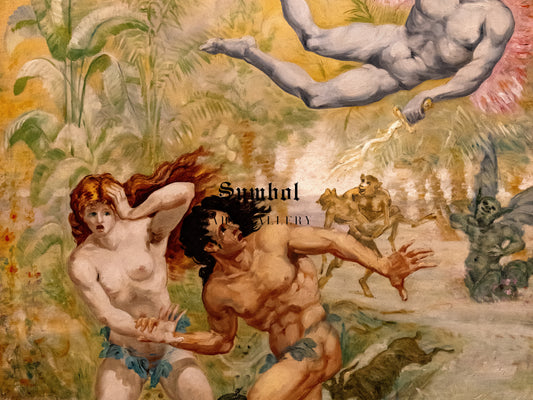
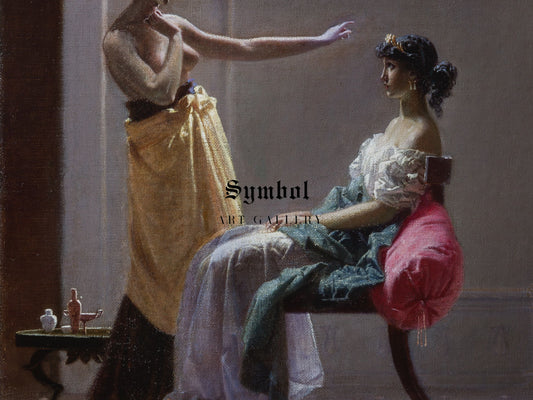
The plates gathered here include reconstructions of major sculptural and architectural sites, mythological subjects after antique sources, and decorative ornament drawn from vases, friezes, and wall painting. The collection sits between the gallery's Medieval & Byzantine Art holdings, which extend the same Mediterranean tradition into the early Christian centuries, and the Rococo & Neoclassicism selection, where the European rediscovery of antiquity took its most explicit eighteenth century form. Jacques-Louis David's career rests directly on the engravings catalogued in this group.