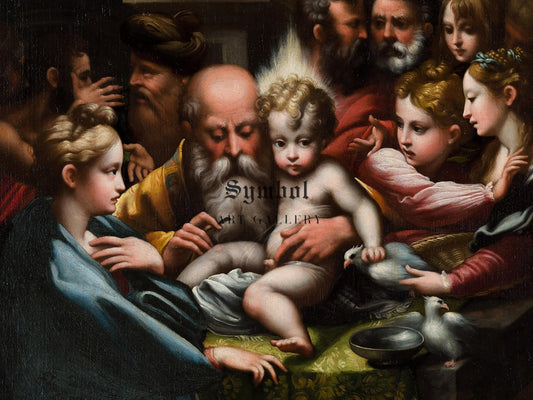
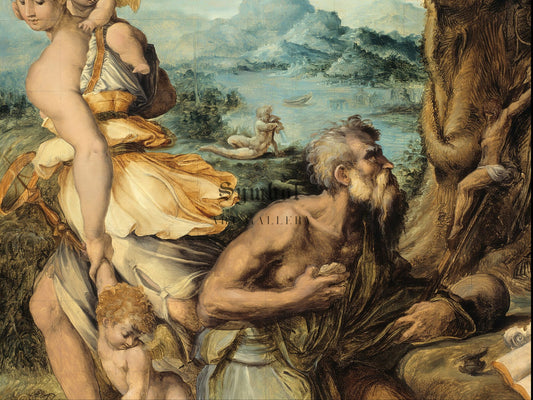
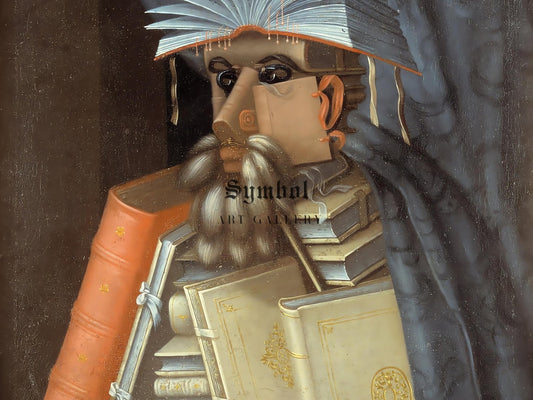
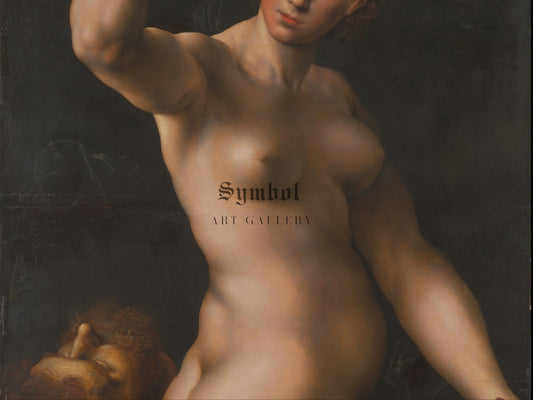
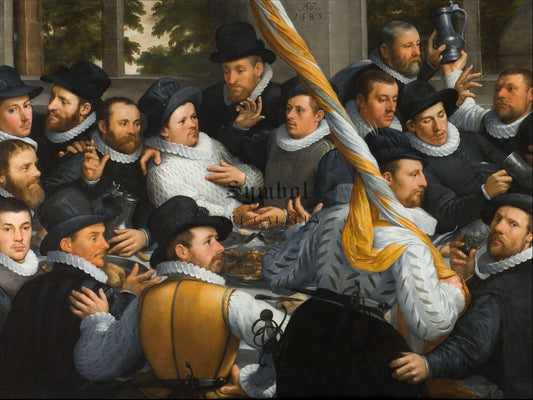
Mannerism took shape in Italy in the years immediately following 1520, as the generation after Raphael and Michelangelo turned the achieved harmony of the High Renaissance into something deliberately strained. The period saw elongated figures, compressed or impossibly extended spaces, and unnaturalistic colour applied in the service of compositional ingenuity rather than direct observation.
The principal Italian Mannerists were Pontormo, Rosso Fiorentino, and Parmigianino, working in Florence, Rome, and Parma. Bronzino, court painter to Cosimo I de' Medici in Florence, made the style the dominant idiom of mid-century portraiture. The Sack of Rome in 1527 functions as the unofficial historical caesura between the High Renaissance and the Mannerist generation.
The style spread across Europe through prints, court patronage, and the Spanish branch around El Greco, who had absorbed Venetian colour and Mannerist composition in Italy before settling in Toledo. Mannerism prepared the ground for the dramatic intensity of Baroque painting in the seventeenth century.